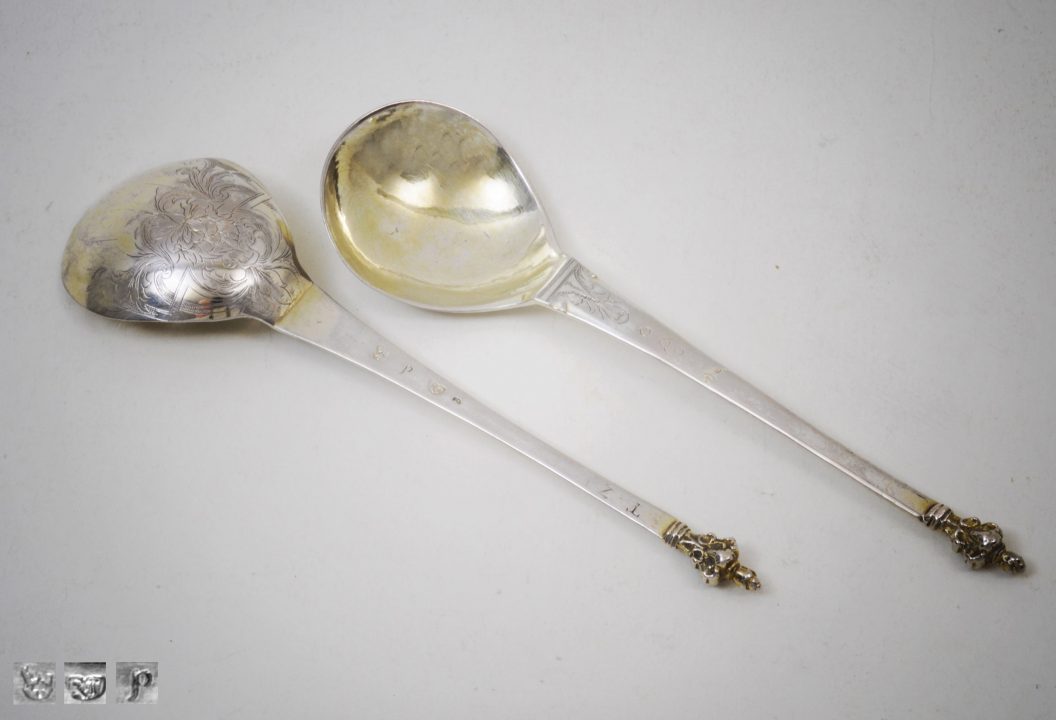
Fine German Silver Partly Gilt Spoons, Forming a Pair
These fine German silver partly gilt spoons, forming a pair, are made at the beginning of the 18th century in Konigsberg by Robert Tapke....


These fine German silver partly gilt spoons, forming a pair, are made at the beginning of the 18th century in Konigsberg by Robert Tapke....
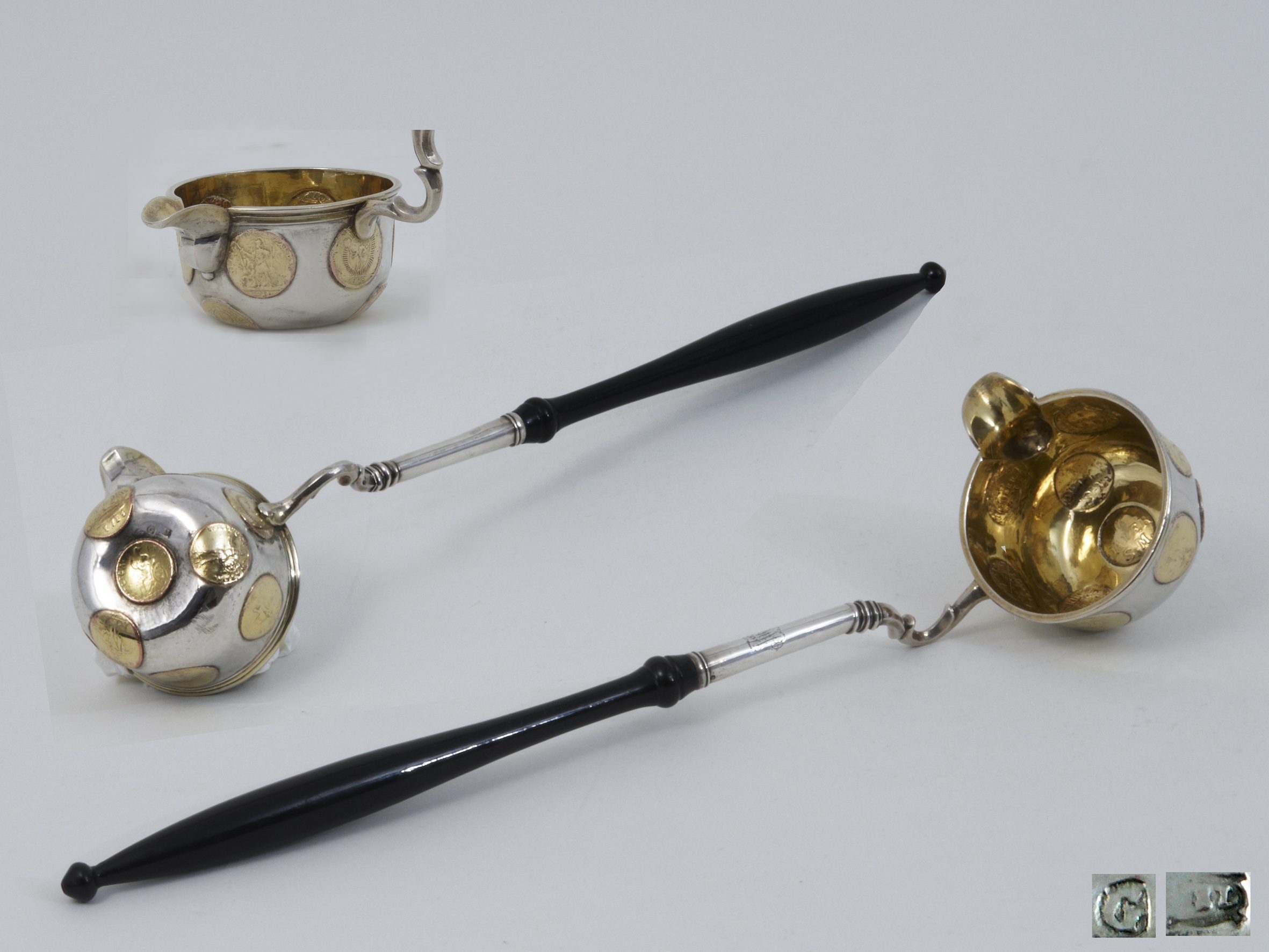
This silver, partly-gilt ladle decorated with inset coins (coin ladle) is a rare object from Güstrow of the early 18th century. Maker: Caspar Joh. Livonius....
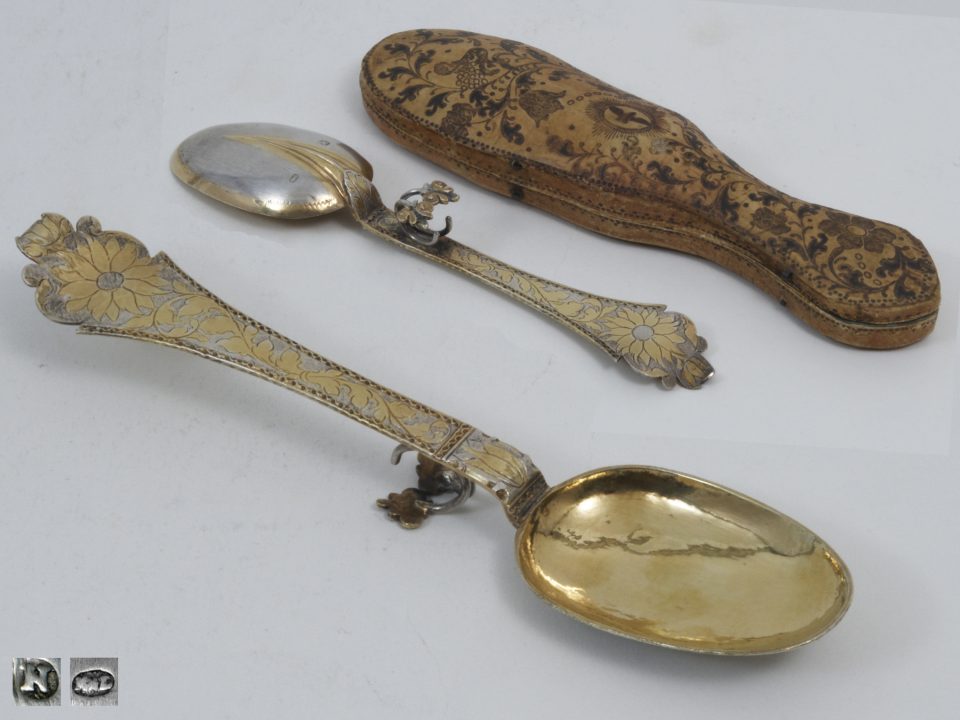
The oval bowl with tapering stem chased on each side with vines, tulips and sunflowers, the stem applied with a scroll and leaf support, marked on bowl, with fitted leather case...
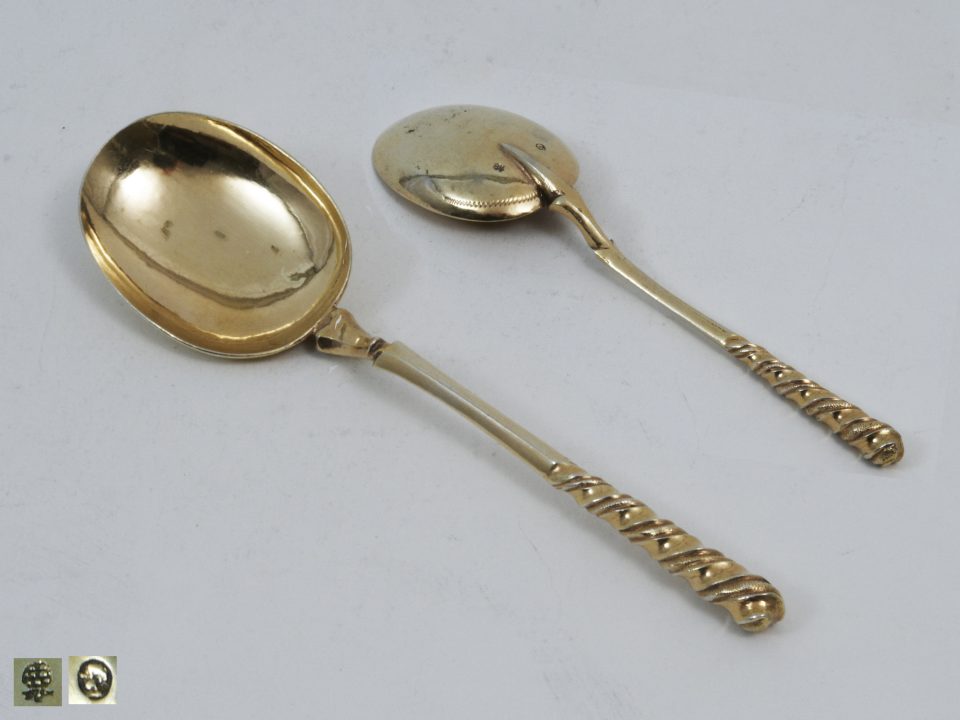
This silver gilt spoon presents a wonderful example of the baroque eating culture of the end of 17th century from Augsburg. The maker is Abraham Mair....
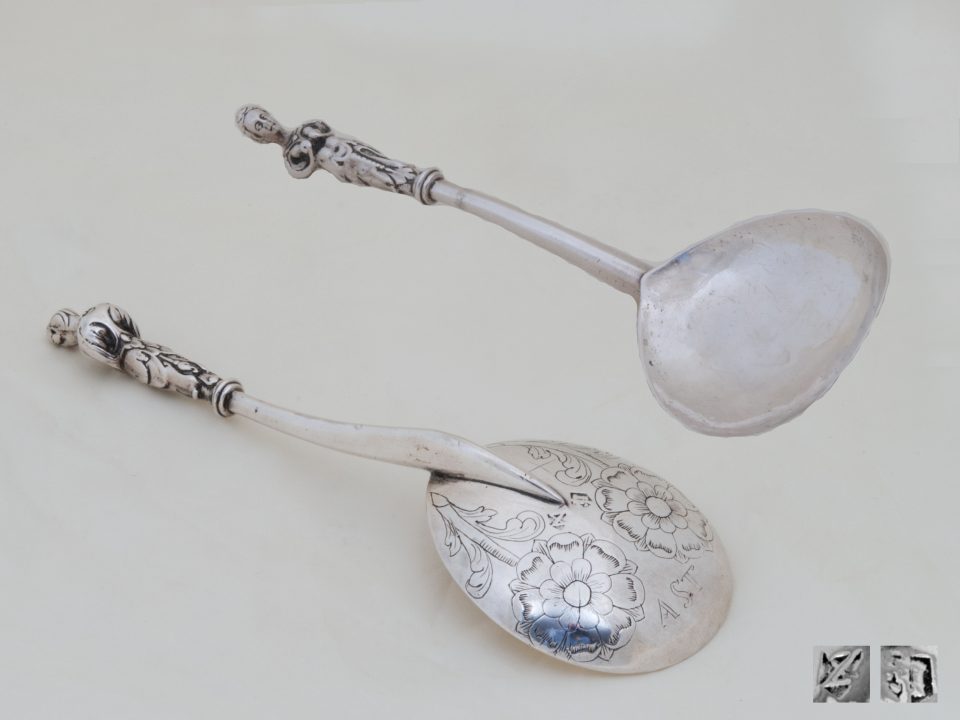
Silver herm-like figure spoon refers to a pier shaft with mounted head and shoulders. Edged oval handle on completion with female Herm. Made in Zurich, c. 1630....
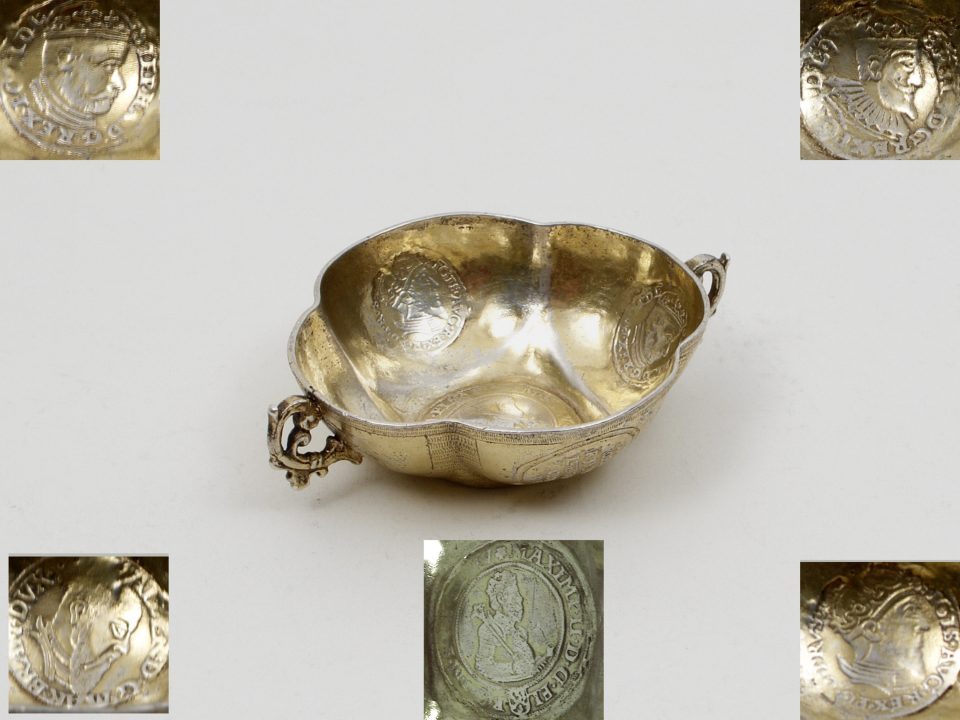
The present, silver-gilt German drinking bowl is with inset coins of Polish dukes and earls. The drinking bowl was often used for drinking wine or brandy....
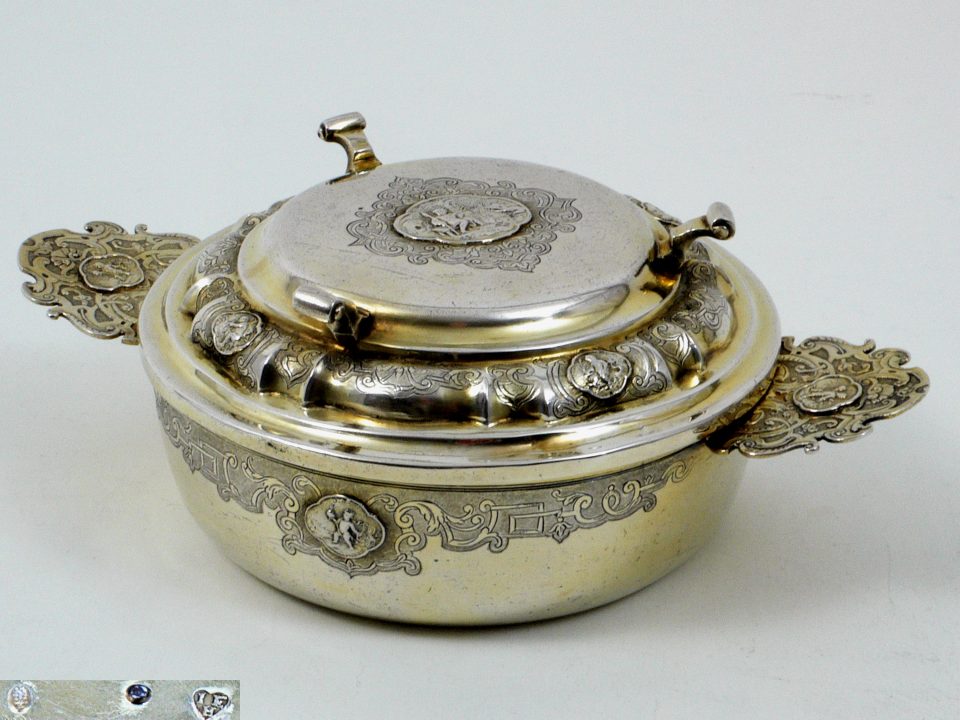
This silver gilt porringer with cover (écuelle) from Augsburg is an excellent example of the Régence style in the 18th century. The maker is Johann Erhard II Heuglin....
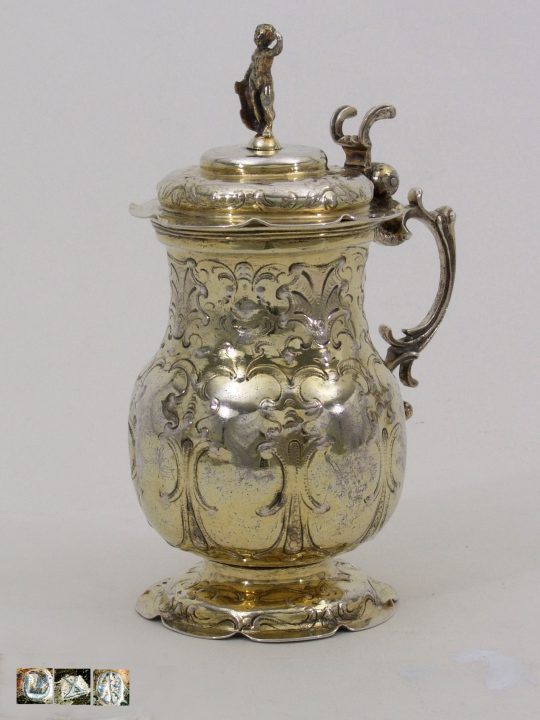
This fine early German silver-gilt jug with lid was made in Leipzig in 1626/8 in the style of the German auricular decoration by Andreas Kauxdorf the Elder....
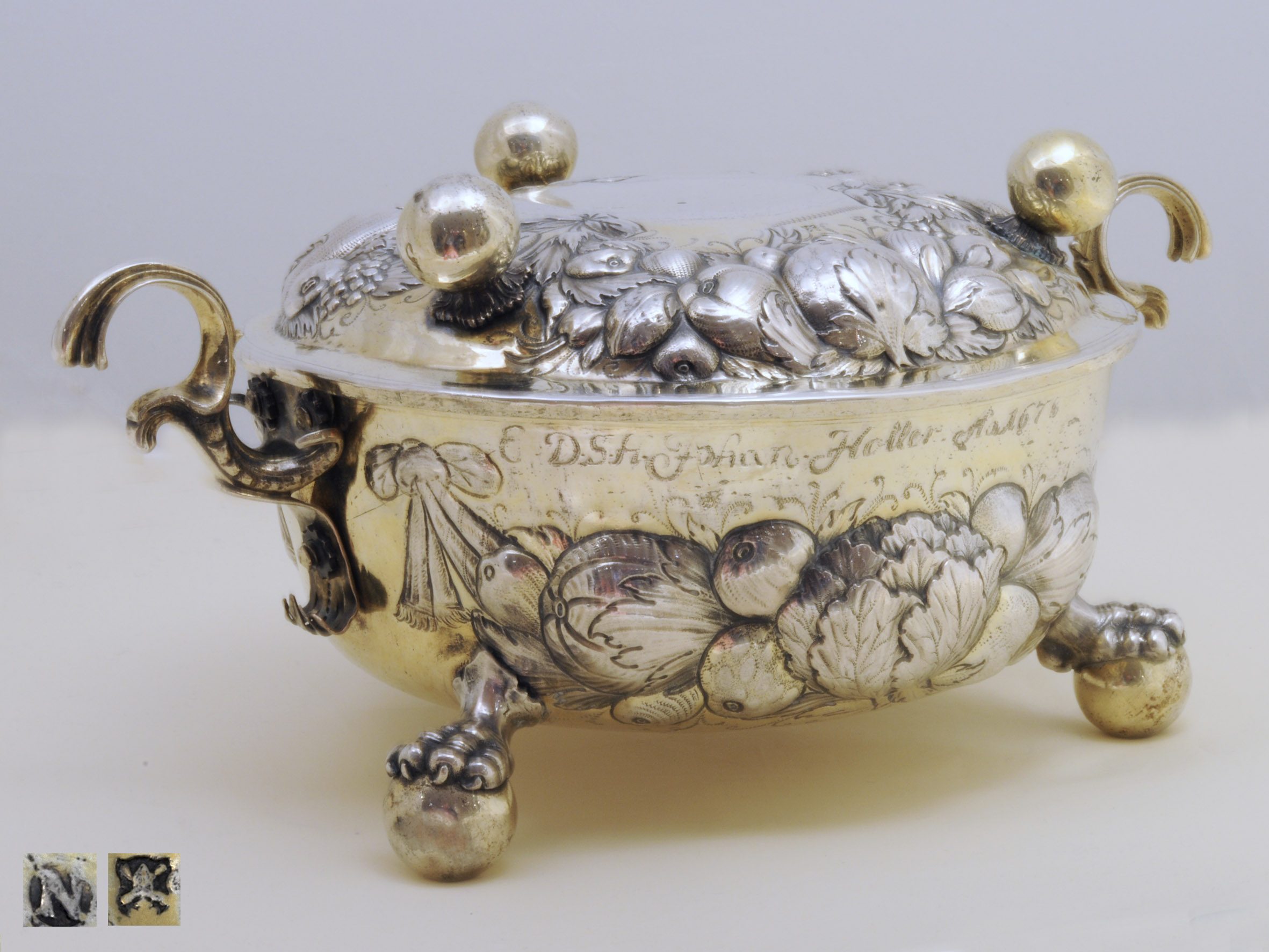
This silver, parcel-gilt two-handled bowl and cover, in German called “Wöchnerinnenschüssel“ has an (art) historical as well as utilitarian and symbolic value. It was made in Nuremberg, second half of the 17th century....
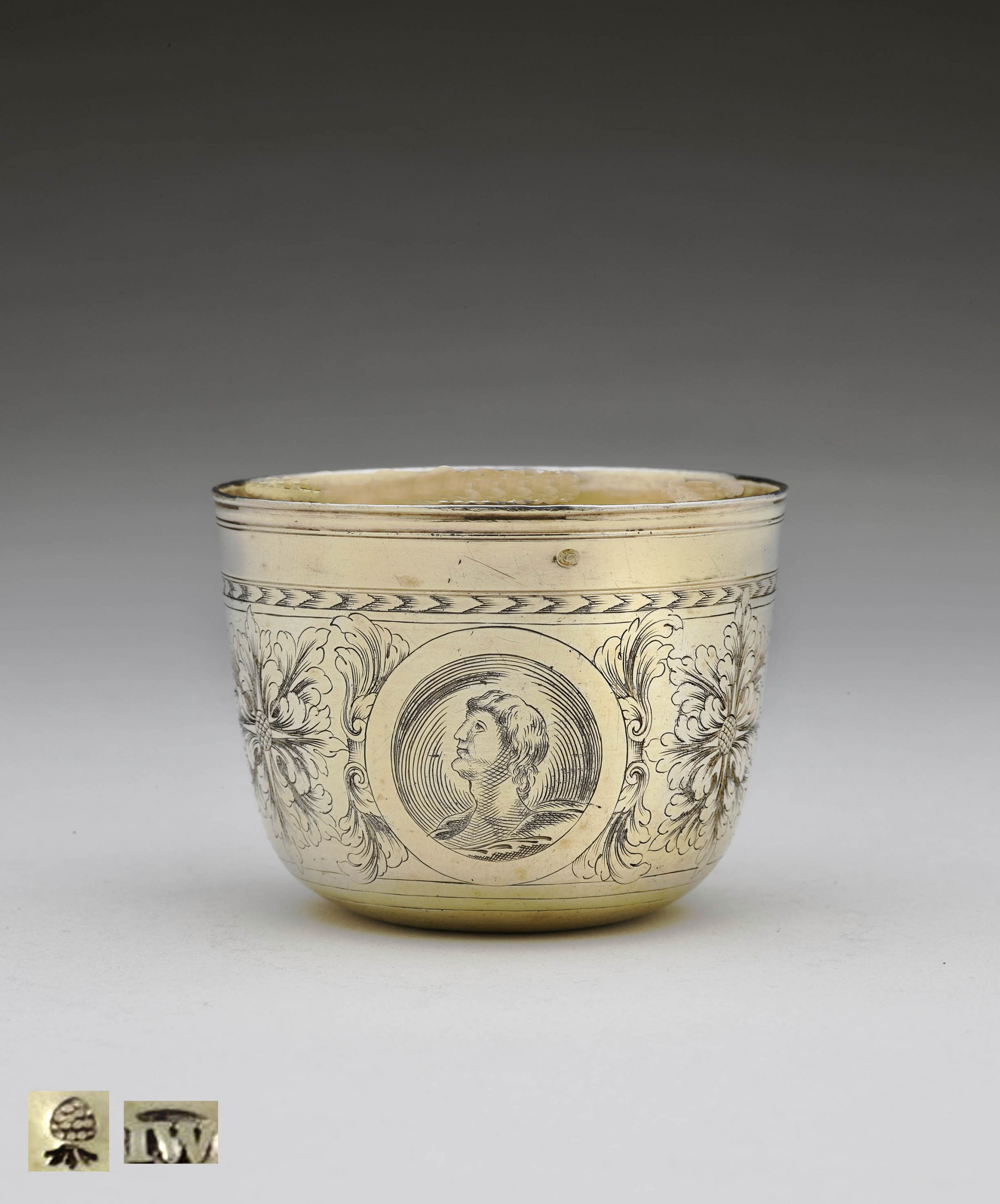
The beaker is a so-called silver tumbler of the late baroque period, made in Augsburg. Very remarkable is the gilding as well as the rich engraved décor....